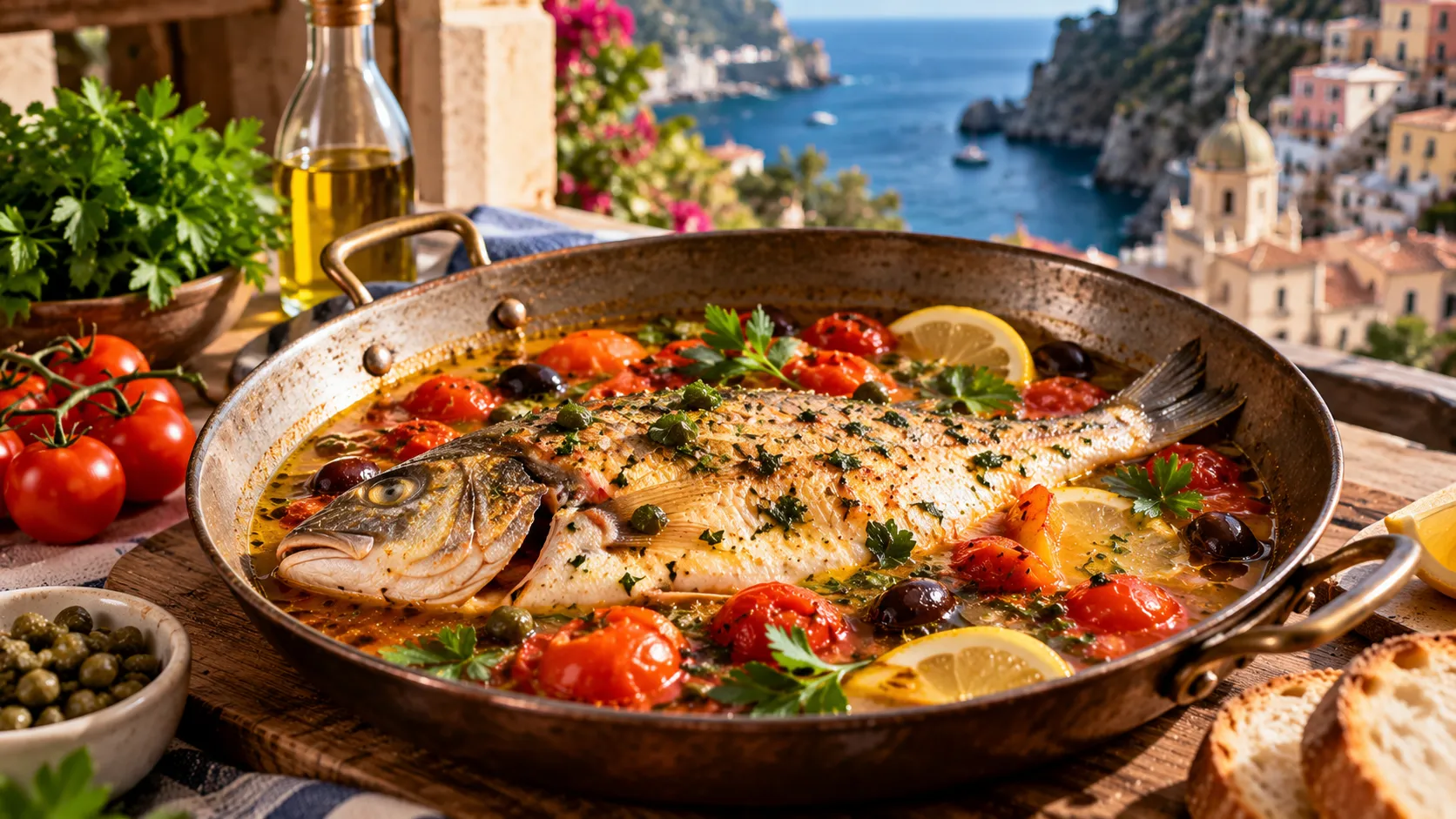
Acqua Pazza Explained:The Southern ItalianSeafood TraditionBehind Fish Cooked inIts Own Broth
Discover the culinary history and technique behind acqua pazza. Learn how this traditional Southern Italian seafood preparation turns simple ingredients into a rich broth.
In traditional coastal cooking, acqua pazza translates from Italian to "crazy water" a historic Southern Italian culinary technique where a whole, freshly caught white fish is gently poached in a shallow, vigorously bubbling broth of water, extra virgin olive oil, sweet tomatoes, and aromatic herbs. Rather than relying on heavy reductions, cream bases, or complex stocks, this preparation extracts the natural gelatin from the fish to create a light, perfectly emulsified sauce directly in the pan. Understanding this dish provides a clear window into the philosophy of coastal Mediterranean cooking, where absolute ingredient quality and minimal manipulation dictate the success of the entire recipe.
The Meaning and Culinary History of "Crazy Water"
Like many of the most respected regional recipes across the Italian peninsula, this preparation began out of economic necessity rather than high-end restaurant innovation. The technique is deeply rooted in the coastal traditions of the Campania region, particularly among the fishermen of Naples and the Amalfi Coast.
While some modern culinary narratives frequently repeat the claim that a 19th-century salt tax forced fishermen to boil their catch in seawater, food historians view the dish’s origin through a more practical lens. Fishermen preparing meals on their boats required a fast, efficient way to cook a portion of their daily catch using the limited resources available on deck. Fresh seawater provided the necessary salinity to season the flesh, while a splash of local wine, a few crushed tomatoes, and a heavy pour of olive oil turned the aggressive, bubbling liquid into a palatable and highly satisfying meal.
The vigorous, erratic bubbling of the oil and water mixing over a high open flame earned the technique the colourful name "crazy water." Today, modern kitchens use fresh filtered water or a very light seafood stock seasoned with high-quality sea salt, but the fundamental Italian acqua pazza methodology remains completely intact.
The Core Elements of the Broth
What makes this dish remarkable is how a handful of separate ingredients transform into a cohesive, deeply flavourful sauce in under twenty minutes. A true Southern Italian seafood dish relies on restraint, meaning every single element added to the pan must serve a distinct purpose.
The Liquid: Water is the standard base, occasionally augmented by a splash of dry white wine to deglaze the pan and provide a subtle acidic backbone. The liquid is kept purposefully shallow; the fish should be poached, not fully submerged and boiled.
The Tomatoes: This is arguably the most critical flavour component. In Campania, chefs traditionally use Pomodorini del Piennolo or sweet cherry tomatoes. The dish only requires a handful of tomatoes to gently tint the water and provide a mild acidity that cuts through the richness of the olive oil. This subtle balance is what separates a genuine fish cooked in tomato broth from a heavy, stew-like marinara preparation.
The Olive Oil: Extra virgin olive oil is not merely a cooking fat in this recipe; it is a primary ingredient that forms the body of the sauce. A generous pour is required to create the final emulsion.
The Aromatics: Garlic is typically crushed and left whole to perfume the oil before being removed or pushed to the side. Peperoncino (red chili flakes) is often added for a very mild background heat, while fresh parsley is stirred in at the absolute last second to preserve its bright, grassy flavour.
Culinary Science: How the Emulsion Happens
The transformation from raw ingredients to a finished Italian fish preparation relies heavily on basic culinary science. The magic of the dish lies in the physical emulsification of oil and water.
When you cook a whole fish, the heat begins to break down the natural collagen found in the skin, bones, and connective tissues. As the shallow liquid in the pan simmers, this collagen melts into gelatin and dissolves into the water. Simultaneously, the heat bursts the tomatoes, releasing their natural juices and sugars into the pan.
As the liquid reduces, the chef continuously bastes the fish. This physical action, combined with the rolling, vigorous boil of the cooking liquid, forces the extra virgin olive oil to emulsify with the gelatin-rich water and the acidic tomato juice. The result is a glossy, slightly thickened broth that coats the back of a spoon. This ranks among the most brilliant Italian seafood cooking techniques because it creates a sauce that tastes intensely of the sea without requiring hours of separate stock reduction.
Selecting the Right Fish for the Preparation
The success of an acqua pazza fish depends entirely on the variety of seafood selected. The technique requires lean, white-fleshed fish that possess a firm structure capable of withstanding gentle simmering without falling apart or turning mushy.
In Italy, chefs typically reach for Spigola or Branzino (European sea bass), Orata (gilthead bream), or Scorfano (red scorpionfish). These species possess the perfect balance of firm flesh and high collagen content. For diners exploring the local market in Singapore, premium equivalents like red snapper, grouper, or local sea bass work exceptionally well.
Oily, dark-fleshed fish such as mackerel, tuna, or salmon are strictly avoided for this specific recipe. The high fat content and pronounced flavour of these species clash directly with the delicate olive oil emulsion, resulting in a greasy broth and a heavy, unpleasant profile that overpowers the subtle aromatics.
Comparing the Technique to Other Traditional Italian Seafood Dishes
Understanding regional differences helps diners navigate an authentic Italian restaurant menu more effectively. While often grouped together, the distinctions between coastal preparations are clear to an experienced palate.
| Feature | Acqua Pazza | Cacciucco / Brodetto | Pesce al Forno |
|---|---|---|---|
| Cooking Method | Shallow stovetop poaching | Slow simmering / Stewing | Dry baking in an oven |
| Primary Liquid | Water, white wine, olive oil | Heavy tomato base, fish stock | Minimal (uses natural fish juices) |
| Seafood Used | Usually a single whole white fish | Mixed fish, shellfish, squid, crustaceans | Single whole fish or large fillets |
| Texture of Sauce | Light, thin, glossy emulsion | Thick, dense, hearty stew | Very little sauce, slightly dry |
Unlike complex stews built from multiple varieties of fish and crustaceans swimming in a dense tomato base, the crazy water method is highly focused and intentionally light. It also differs significantly from baked fish preparations, as the stovetop poaching allows the chef to actively manage and adjust the sauce development minute by minute.
What to Look for in a Well-Prepared Dish
When encountering this preparation on a menu, there are several indicators of culinary integrity. An authentic execution should never mask the primary ingredient.
The fish should arrive incredibly moist, with the flesh easily pulling away from the bone. The broth should pool at the bottom of the plate it is a sauce, not a soup. It should exhibit a bright, slightly orange hue from the emulsified tomatoes and oil, and it should carry a clean, briny aroma rather than a heavy fishy scent.
Finally, the dish must be served with thick slices of rustic, toasted bread. The broth is a highly prized component of the meal, and diners are expected to use the bread to soak up every remaining drop from the plate a cherished Italian dining practice known as fare la scarpetta.
Experiencing the Tradition at Gotti Italiano
For diners seeking authentic regional flavours in Singapore, observing how a kitchen handles its seafood reveals a great deal about its dedication to heritage. Premium establishments that respect Southern Italian roots understand that exceptional seafood requires minimal manipulation.
At Gotti Italiano, the culinary philosophy centres on this exact respect for generational technique. Highlighting seasonal catches and imported ingredients, the kitchen often features Branzino in Acqua Pazza as a dedicated weekend special. This execution showcases a whole Mediterranean Sea bass poached flawlessly in a delicate broth featuring San Marzano tomatoes, Ligurian olives, capers, and fresh herbs.
Alternatively, diners exploring they executive set lunch may encounter Spigola all’Acquapazza, where fresh sea bass is accompanied by a light fish broth, cherry tomatoes, and white wine. By sourcing premium ingredients and applying strict historical cooking standards, the kitchen ensures that the natural, sweet flavour of the fish remains the undisputed focal point of the plate. The next time you encounter fish poached in this light tomato and olive oil broth, you will understand the deep coastal history and culinary mechanics behind every bite.
Frequently Asked Questions
What does acqua pazza mean?
The phrase translates directly to "crazy water" in English. The name historically refers to the vigorous, erratic bubbling that occurs when water and olive oil are boiled together rapidly over a high open flame during the poaching process.
What type of fish is traditionally used?
The technique requires lean, white-fleshed fish with a firm structure. Traditional Italian choices include European sea bass (Branzino or Spigola) and gilthead bream (Orata). Oily fishlike salmon or tuna are never used because their high fat content ruins the delicate broth.
Do you eat the broth served with the fish?
Absolutely. The broth is a highly flavourful emulsion of extra virgin olive oil, tomato juices, and natural fish gelatin. Diners traditionally use slices of crusty, rustic bread to soak up the remaining liquid after finishing the fish.
Is this dish traditionally spicy?
It usually carries only a very mild background heat. Authentic recipes often include a small pinch of dried red chili flakes (peperoncino) added to the hot oil along with the garlic to lift the flavours, not to overpower the delicate seafood.
Does the preparation contain alcohol?
Many traditional recipes call for a small splash of dry white wine to deglaze the pan and add a necessary acidic backbone to the broth. However, the alcohol cooks off rapidly during the vigorous boiling process, leaving only the aromatic qualities behind.
How is it different from an Italian seafood stew?
Acqua pazza is a shallow poaching method used typically for a single whole fish, resulting in a very light, thin broth. Traditional Italian seafood stews, such as Cacciucco, use a dense, heavy tomato base and feature a wide mixture of different fish, shellfish, and squid.
Should the fish be cooked whole or in fillets?
While modern restaurants occasionally use fillets for convenience or lunch service, the traditional and superior method uses a whole fish cooked on the bone. The bones, head, and skin release essential collagen, which naturally thickens and flavours the resulting broth.
What is the traditional side dish for this preparation?
Because the dish is remarkably light and protein-focused, it is rarely served with heavy pasta. It is traditionally accompanied solely by thick slices of toasted bread to absorb the broth, though simple roasted potatoes or a bitter green salad are also historically accurate pairings.