Trattoria vs Osteriavs Ristorante: What’sthe Difference at ItalianRestaurants inSingapore?
Confused by the different Italian restaurant types Singapore has to offer? Learn the exact historical differences between a trattoria, osteria, and ristorante.
Walking down streets in the energetic business district, you will easily spot multiple Italian eateries. Many of them proudly display traditional Italian titles on their storefront signs. To the casual observer, these words might seem like simple, interchangeable translations for any place that serves pasta and wine.
However, Historically, these names often gave diners clues about the food, atmosphere, service style and type of experience they could expect. If you want to accurately navigate the different Italian restaurant types of Singapore has to offer today, it helps to understand how these traditional labels originally shaped the guest experience. Knowing the history behind the names allows you to book the right table for the right occasion.
The Traditional Roles of Italian Dining
The Italian approach to hospitality is highly structured and deeply rooted in local communities. For centuries, the names of eating and drinking establishments followed clear cultural rules based on their primary function in society. This naming system helped locals know exactly what they were walking into on any given night.
Whether a person needed a quick, cheap glass of wine after a long day of work, a hearty family meal on a Sunday afternoon, or a highly formal evening out to celebrate a milestone, the sign on the door provided an instant summary of the business model. To fully appreciate the various Italian dining styles Singapore has adopted in recent years, we first must look at the historical definitions of these three primary dining categories.
What Is an Osteria?
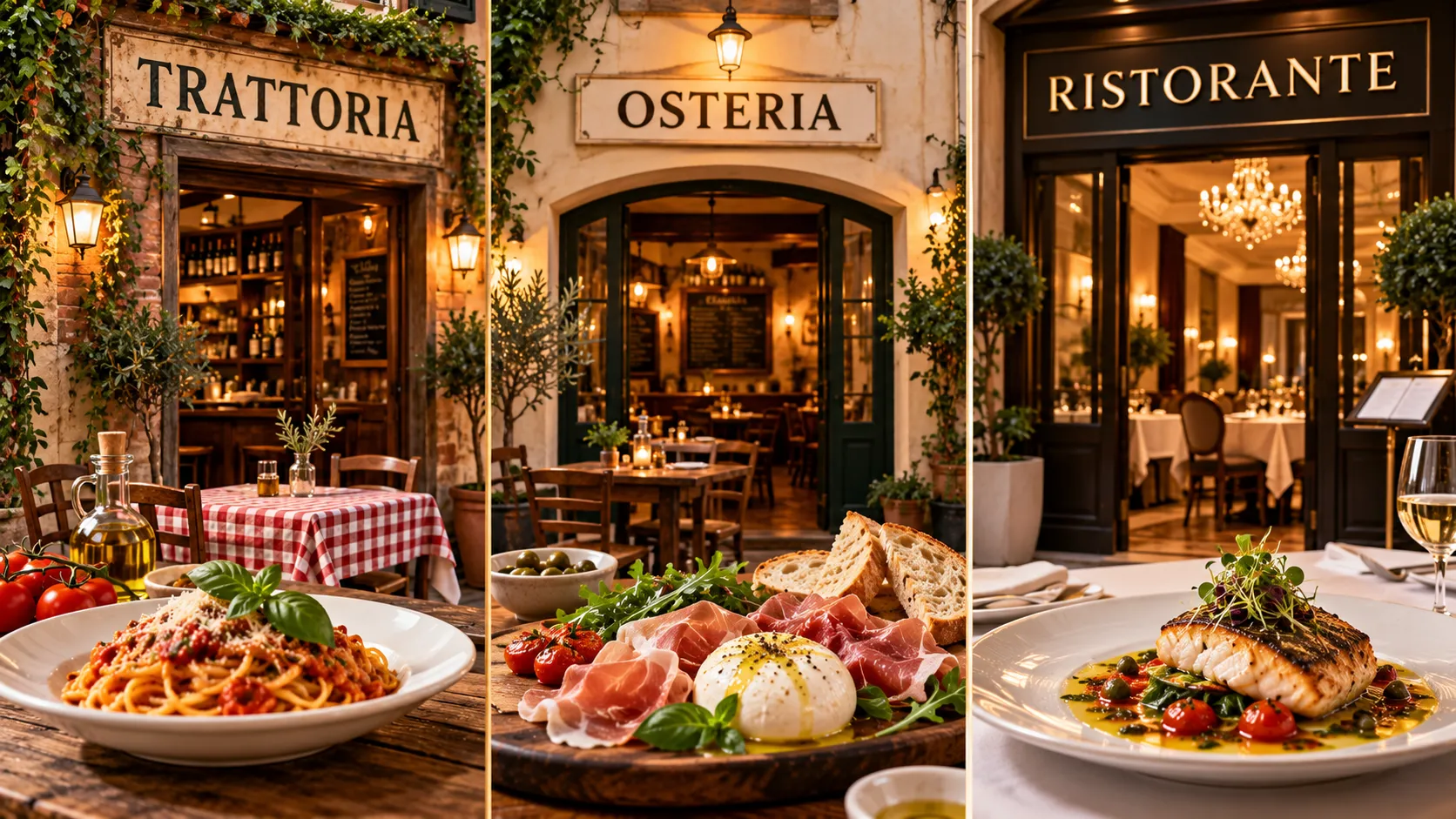
If we look back to the very beginning of Italian hospitality, what is an osteria? Historically, an osteria functioned primarily as a humble neighbourhood wine bar. Centuries ago, these specific establishments did not even have a functioning kitchen. Patrons would bring their own food from home or the local market, and they would only pay the innkeeper for the wine they consumed. The atmosphere was characteristically loud, convivial, and centred entirely around drinking, playing cards, and socializing with neighbours.
Over time, owners realized they could keep their patrons drinking longer by offering a few simple snacks. This naturally evolved into very short, unwritten menus featuring local cured meats, regional cheeses, and perhaps a single daily pasta dish prepared by the owner. The core identity, however, always remained firmly focused on the wine list and the social environment. Today, a traditional osteria is a place designed for shared tables, simple local bites, and a highly relaxed environment where the drinks take centre stage over the food.
What Is a Trattoria?
Moving one step up the formality ladder brings us to the most beloved institution in Italian food culture. So, what is a trattoria? This is traditionally a modest, family-run business where the focus shifts firmly from pouring wine to serving food. A true traditional trattoria is unpretentious, lively, and incredibly welcoming to large groups. The recipes are strictly regional and usually passed down through multiple generations of the same family.
Historically, a trattoria would not offer a printed paper menu. The matriarch or patriarch of the family would simply walk up to your table and tell you what they cooked that day. The daily offerings were entirely dependent on what ingredients were fresh and available at the morning vegetable and meat markets. The portions in these establishments are famously large, the plating is completely rustic, and the food is designed to taste exactly like a warm home-cooked meal. It serves as the absolute backbone of Italian comfort eating. It is the type of place where you go to eat heartily without worrying about strict dining etiquette or hushed voices.
What Is a Ristorante?
At the very top of the traditional dining hierarchy sits the most formal option available. If you are wondering what a ristorante is, you need to picture crisp white tablecloths, highly professional service, and a rigidly structured meal. A ristorante is a destination built for special occasions, business meetings, and refined dining experiences.
Unlike the casual neighbourhood spots, a ristorante employs a full brigade of trained hospitality staff, including dedicated sommeliers, professional hosts, and specialized kitchen teams. Guests are presented with extensive printed menus offering a full coursed meal. This usually includes antipasti, primi (pasta or risotto), secondi (meat or fish), contorni (side dishes), and dolci (desserts). The chef focuses on sophisticated cooking techniques, precise and artistic plating, and a broader representation of national cuisine rather than just serving hyper-local neighbourhood dishes. You visit this type of venue when you expect a polished, comprehensive, and quiet hospitality experience.
Comparing the Core Differences
The distinctions become much clearer when you put these three establishments side by side.
When looking at a trattoria vs osteria, the primary difference is the focal point of the business model. An osteria is traditionally a wine-centric establishment with a very limited food offering meant to support the drinks. A trattoria is a food-centric establishment focusing on hearty, regional meals that are meant to feed the whole family.
If we compare a trattoria vs ristorante, the contrast is entirely about the level of formality and structure. A trattoria offers a highly relaxed environment with rustic presentation, large, shared portions, and a familiar, casual service style. A ristorante delivers highly trained service, complex plating, and a structured, multi-course menu meant to be eaten in a specific order.
Are These Differences Still Strict Today?
While the traditional definitions are historically fascinating, the global food scene has shifted significantly over the last few decades. When exploring the different types of Italian restaurants operating today, you will quickly realize that modern chefs and restaurateurs often play fast and loose with these historical categories.
In modern cities all over the world, an establishment might call itself an osteria on the sign but offer a highly curated, premium tasting menu inside. A spot labelling itself a ristorante might completely ditch the formal dress codes and white tablecloths in favour of a moody, relaxed, industrial aesthetic. The terms are now frequently used by owners to convey a specific feeling rather than a strict set of operating rules. A chef opening an upscale venue might use the word trattoria simply to signal to guests that the food is comforting and rooted in old family recipes, even if the actual dining room setting is quite luxurious.
Italian Restaurant Types in Singapore
The local dining scene reflects this global evolution beautifully. Singapore has a highly educated palate, and diners here expect both exceptional food and a highly engaging atmosphere. Because of this, the strict historical boundaries have blurred to create exciting hybrid concepts that perfectly suit the fast-paced, cosmopolitan lifestyle of the city.
You will find neighbourhood spots calling themselves osterias that serve full dinner menus to hungry office workers. You will also see trattorias operating with the incredible polish and extensive wine cellars of a traditional formal dining room. This blending of concepts makes the local dining landscape incredibly dynamic. Establishments borrow the warmth of a family kitchen, the lively energy of a local wine bar, and the professional execution of fine dining, merging them together into singular spaces.
How to Choose the Right Italian Dining Experience
Knowing the historical roots of these terms helps you set the right expectations for your evening out. If you want a quick glass of wine and some cured meats after work with colleagues, looking for an osteria-style concept fit perfectly. If you crave honest, generational recipes in a lively, unpretentious atmosphere, a classic trattoria approach is exactly what you need.
For a major milestone celebration or a structured business dinner where you might investigate booking private event spaces, a formal ristorante-style setting provides the necessary polish and privacy.
However, you do not always have to choose just one strict category. Many of the best venues now combine these elements seamlessly under one roof. You can easily find a place that offers the sophisticated plating of a fine dining room while maintaining the warm, welcoming soul of a neighbourhood kitchen. If you want to explore this kind of hybrid offering, reviewing a comprehensive Italian dinner menu beforehand gives you a great sense of how an establishment balances rustic charm with modern refinement.
How Gotti Fits into the Landscape
Located in the energetic CBD district, Gotti naturally blends the best elements of these traditional categories into a modern context. The foundation of the kitchen is built squarely on the soul of Naples and deep Southern Italian heritage. The culinary approach reflects the honest, bold flavours and generational techniques you would historically find in a beloved family-run kitchen.
Yet, the execution and the atmosphere push far beyond a modest neighbourhood eatery. The space is designed to capture the electric energy of modern city life. It transitions smoothly from an elegant dining room into a moody, premium lounge as the evening progresses. Guests can enjoy hand-rolled pastas and expertly crafted Neapolitan pizza with the polished service and curated mixology usually reserved for a high-end formal space. It is an environment built on deep respect for honest food, designed specifically for those who appreciate both tradition and a modern nightlife pulse. When you are ready to experience this dynamic approach to Southern Italian cooking, you can easily secure a table for your next gathering online.
Conclusion
The words printed on the sign above the door still matter, but they now serve more as a nod to heritage than a strict operating rulebook. Understanding the traditional roles of these establishments enriches your appreciation of the food and the incredible culture behind it. Whether you are seeking a quiet glass of wine, a comforting plate of familiar pasta, or a highly polished multi-course dinner, the Italian food world has a specific format designed just for that moment. Recognizing these subtle historical differences simply makes your next meal more rewarding.
Frequently Asked Questions
Q1. Can you order pizza at an osteria or ristorante?
Traditionally, no. In Italy, pizza is served in a specific establishment called a pizzeria. Osterias focus on wine and small bites, while formal dining rooms focus on structured, multi-course meals. However, outside of Italy, it is very common for all types of establishments to feature high-quality pizza on their menus to meet modern diner expectations.
Q2. Are dress codes different for these venues?
Historically, yes. Casual family-run spots and wine bars are very informal, meaning everyday attire is perfectly acceptable. A traditional formal venue is an elegant environment that often requires smart casual or formal wear. Today, most modern venues operate with a smart casual policy regardless of the title on the door.
Q3. Do casual family-style Italian restaurants serve alcohol?
Yes, they absolutely do. While wine is not the primary focus as it is in a wine bar, a casual eatery will always have a solid selection of house wines. These are traditionally served in simple glass carafes rather than by the bottle, designed specifically to complement hearty regional food.
Q4. Is a highly formal Italian restaurant always more expensive?
Generally, yes. Because these formal venues employ highly trained staff, use premium table linens, and offer complex menu structures, their operating overhead costs are much higher. This typically translates to a higher price point compared to the casual, rustic nature of the other two formats.
Q5. Why do modern restaurants mix these traditional concepts?
Modern diners often want the best of everything in a single evening. They want the comforting, honest food of a traditional family kitchen combined with the professional service, cocktail programs, and energetic atmosphere of a premium venue. Mixing concepts allows chefs to offer high-quality food without being restricted by old, rigid rules.
Q6. How long does a typical meal take at these different establishments?
A visit to a traditional wine bar can be a quick 30-minute stop for a drink and a snack. A meal at a casual eatery usually takes one to two hours, focused entirely on enjoying a hearty plate of food in a relaxed setting. Dining at a formal venue is a deliberate, paced event meant to last two to three hours across multiple structured courses.